Monday, 17 December 2012
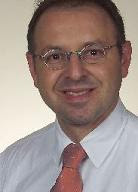
Silvia Miksch talking about time oriented visual analytics
It seems this term we picked a good slot for the lecture. On Thursday we had Prof. Silvia Miksch from Vienna University of Technology visiting our institute. We took this chance for another guest lecture in my advanced HCI class. Silvia presented a talk with the title “A Matter of Time: Interactive Visual Analytics of Time-Oriented Data and Information”. She first introduced the notion of interactive visual analytics and then systematically showed how time oriented data can be visually presented.
I really liked how Silvia motivated visual analytics and could not resist to adapt it with a Christmas theme. The picture shows three representations (1) numbers, always 3 grouped together, (2) a plot of the numbers where the first is the label and the second and the third are coordinates, and (3) a line connecting the labels in order. Her example was much nicer, but I missed to take a photo. And it is obvious that you do not put it on the same slide... Nevertheless I think even this simple Christmas tree example shows the power of visual analytics. This will go in my slide set for presentations in schools ;-)
If you are more interested in the details of the visualization of time oriented data, please have a look at the following book: Visallization of Time-Oriented Data, by Wolfgang Aigner, Silvia Miksch, Heidrun Schumann, and Christian Tominski. Springer, 2011. http://www.timeviz.net [2]. After the talk there was an interested discussion about the relationship and fundamental difference between time and space. I think this is worthwhile further discussion.
Another direction to follow up is tangible (visual) analytics. It would be interesting to assess the contributions to understanding of further modalities when interactively exploring data, e.g. haptics and sound. Some years back Martin Schrittenloher (one of my students in Munich) visited Morten Fjeld for his project thesis and experimented with force feedback sliders [1], … perhaps we should have this as a project topic again! An approach would be to look specifically at the understanding of data when force-feedback is presented on certain dimensions.
References
[1] Jenaro, J., Shahrokni, A., Schrittenloher, and M., Fjeld, M. 2007. One-Dimensional Force Feedback Slider: Digital platform. In Proc. Workshop at the IEEE Virtual Reality 2007 Conference: Mixed Reality User Interfaces: Specification, Authoring, Adaptation (MRUI07), 47-51
[2] Wolfgang Aigner, Silvia Miksch, Heidrun Schumann, and Christian Tominski. Visallization of Time-Oriented Data. Springer, 2011. http://www.timeviz.net
Thursday, 19 March 2009
Zorah Mari Bauer visits, Shape the future but don't ignore it
Zorah Mari Bauer, who describes herself as "… a theorist, pioneer and activist of innovative media", visited our lab. She works at the crossroads of art, design, media and technology and looks into communities, web, TV, and mobile location based applications. We had an interesting discussion on upcoming trends in media and technology and how the inevitable shape our future and how a society has to innovate to be successful. It seems that people who understand the technologies seem to be more positive about the future than those who do not :-) It was very inspiring to discuss future trends with her - hope to continue the discussion in the future!Reading the newspaper was a stark contrast to the interesting and forward looking exchange of ideas. On the way back I found an article in the German newspaper TAZ (www.taz.de) on how evil all the electronic publishing is - it is sometimes really frustrating how little some journalist - even at TAZ - research (or if they research how little they understand). One essential observation in business as well as in society is that if something does not have a value its existence is in danger. Moving towards a digital world for me the added value of traditional publishers is less and less clear - and the only way out is to be innovative… It is very clear that we can shape our future (and it is an exciting time for that) - but it is very clear that if you ignore the future it is still moving on. If you are a publisher and curious about ways to innovate talk to us we have some ideas! E.g. there is a great value if you facilitate relationships (between people, things, places, information) and people strive for external recognition.
Tuesday, 16 December 2008
Tactile interfaces, Visit from Gordon Bolduan


Wednesday, 22 October 2008
Lucia and Thomas from Vodafone R&D visiting


Thursday, 10 July 2008
Visitors to our Lab
Christofer Lueg (he is professor at the School of Computing & Information Systems at the University of Tasmania) and Trevor Pering (he is a senior researcher at Intel Research in Seattle) visited our lab this week. The timing is not perfect but at I am not the only interesting person in the lab ;-)Together with Roy Want and others Trevor published some time ago an article in the IEEE Pervasive Magazine that is still worthwhile to read “Disappearning Hardware” [1]. It shows clearly the trend that in the near future it will be feasible to include processing and wireless communication into any manufactured product and outlines resulting challenges. One of those challenges which we look into in our lab is how to interact with such systems… Also in a 2002 paper Christopher raised some very fundamental questions how far we will get with intelligent devices [2].
[2] Lueg, C. 2002. On the Gap between Vision and Feasibility. In Proceedings of the First international Conference on Pervasive Computing (August 26 - 28, 2002). Lecture Notes In Computer Science, vol. 2414. Springer-Verlag, London, 45-57.
Monday, 31 March 2008
Fraunhofer IAIS visiting Essen
Today former colleagues from Fraunhofer IAIS visited the faculty of economics and computer science here in Essen. It was amazing how many topical connections we found between the research at IAIS and the work that is going on here in business studies, information system, and computer science. We discussed different options for future cooperation – in research and teaching – and I am very hopeful that we create interesting opportunities.
Last year, while still in Bonn, I organized summer @ IAIS. For this year we may go more interdisciplinary and set ourselves high goals… lets see.
Tuesday, 15 January 2008
Showing how exciting Computer Science is!
Living in our own world where everything seems related to pervasive computing it is good to sometime realize that this is still an alien topic. We gave a quick introduction, defining user interface engineering and pervasive computing and then showed two demos of student work in progress (multi-touch displays and driving simulator).
Perhaps some of them are convinced and will start studying with us in the future. With such event it becomes apparent that we should invest more effort to show people and in particular pupils how cool CS is! I would expect if more people realize what computer science really does and what products and services depend on it we would have more applicants as a discipline.
Wednesday, 29 August 2007
Basics of Law - Talk by Herbert Burkert
For developers and researchers in computer science that build real systems which can be deployed it is a great challenge to ensure compatibility with the law. In particular systems that are accessible over the world wide web in almost any country it appears really difficult to conform to all laws in the countries where potential users are.
It is clear that there is a distinction between morally right (or common sense right) and legally right - that is why many TV-pseudo-quiz programs are on and legal even though it is clear that common sense would see them as fraud. With new technologies there appears to be often a gap between on one side what is illegal and on the other side what is wrong but legal. The second one seems to be a domain where people make money...
Monday, 25 June 2007
3 months have passed very quickly
Nigel, Oliver, Mike, and Andre from Lancaster University have been our colleagues at B-IT for the last 3 months. The time has passed very quickly but it was very inspiring to work together.
We worked together on a project using Bluetooth to enable implicit interaction in public spaces. We have created together an interesting demonstrator in the domain of advertising and in particular exploring the implications for targeting public adverts to customers.
Today was the last day for Mike and Andre in
To keep us challenged and busy Nigel’s son asked some of us to convert his transformer from robot to car, and as one can see on the picture this is even for Dagmar not a trivial task ;-)
Thursday, 8 February 2007
Nigel visiting, discussion on transportation
Nigel Davies from Lancaster University in the UK is visiting our group at Fraunhofer and b-it. It was really good to have some time - basically most of the day - to discuss interesting research questions and new direction in pervasive computing.
We discovered that we recently have both looked more into issues related to transport and tracking. I learned about possibilities for developing apps for the TomTom navigation system(which is running linux) and the trakm8 in-car-unit. We had a look at Michael Müller's (master student I supervise in Munich) video of the smart transport container (more details on this at CeBIT).
Both of us are really interested how personal transportation is going to change and how computer science will make its contributions to that? The discussion on motives and motivations for choosing a particular mode of transport, what are the perceived values of certain transport modalities, and how can we influence them made me really think of implications of pervasive computing that are to come.
It is remarkable that as "cars" become more programmable interesting research projects start at many different institutions looking into automotive computing on an application level with an aim for new user experience and additional services/functionalities.